The tunnel story was invented in the 1970s. The ground that actually holds unrecorded dead was a county car park until 2004. What is real here, and what each thing costs.
The Shanghai Tunnels are not what the tour says
The story goes that a network of passages under Old Town was used to drug men in saloons and drag them out to waiting ships, fifteen hundred a year, and that the city suppressed the evidence to protect its reputation. Two parts of that are true: shanghaiing genuinely happened in Portland, and there are genuinely basements and delivery spaces under those buildings. The connection between them is the invented part. Historians of the district have found no evidence of any tunnel network tied to crimping, and the earliest version of the claim dates from the 1970s - it was popularised by the man who began running the tours. The Oregon Encyclopedia puts it plainly: what you walk into today is a basement.
Block 14, which is not a ghost story
Lone Fir Cemetery opened in 1855 in inner southeast Portland. More than three thousand Chinese and Chinese American people were buried there between the 1860s and the 1920s, most of them in Block 14, a segregated section at the southwest corner. Many were later exhumed for return to China as custom required; some were not, and remain in unmarked ground. Researchers believe up to a hundred and thirty-two people who died in Portland's first private mental hospital lie in the same corner. This is not included here as something to be spooked by. It is the part of Portland's dead that is real and was almost lost.
The county paved it
In the 1950s, when Multnomah County held the cemetery, that corner was turned into a maintenance yard and a parking lot, and an office building stood on it until 2005. In 2004, as the county prepared to sell the site to housing developers, a ground survey showed anomalies underneath, and excavation turned up shards of Chinese pottery, two coffins and human remains. Set that beside the tunnels: the story the city sells was made up fifty years ago, and the ground that actually held unrecorded dead was a car park. Lone Fir is free and open in daylight, and it is the serious stop in this city.
The Benson
The hotel opened on 5 March 1913, French Empire style, and was renamed for Simon Benson - a Norwegian immigrant, lumber baron and committed teetotaller - when he took it over. The standard story has him on the upper floors in evening dress, and knocking drinks out of guests' hands in the bar, which is at least in character for the man. It is a working hotel: the lobby and the bar are open to anyone who walks in, no tour required, and that is the whole of the access anyone has.
Free, paid, and what a tour is for
Lone Fir is free. Old Town is free to walk. The Benson's lobby is open. The underground tour charges, and what it sells is a basement with a story attached that historians do not support. That does not make it a bad hour - guides are often good company and the basements are real - but you should know which you are buying. The honest version of a Portland ghost tour leads with what the city did to Block 14.
The entry price is cheaper than three quarters of US ghost tours, which start around $25, so this is genuinely cheap for a ghost tour rather than just cheap.
Portland ghost tours
2 of the 2 Portland tours we track
. Ordered by review depth.
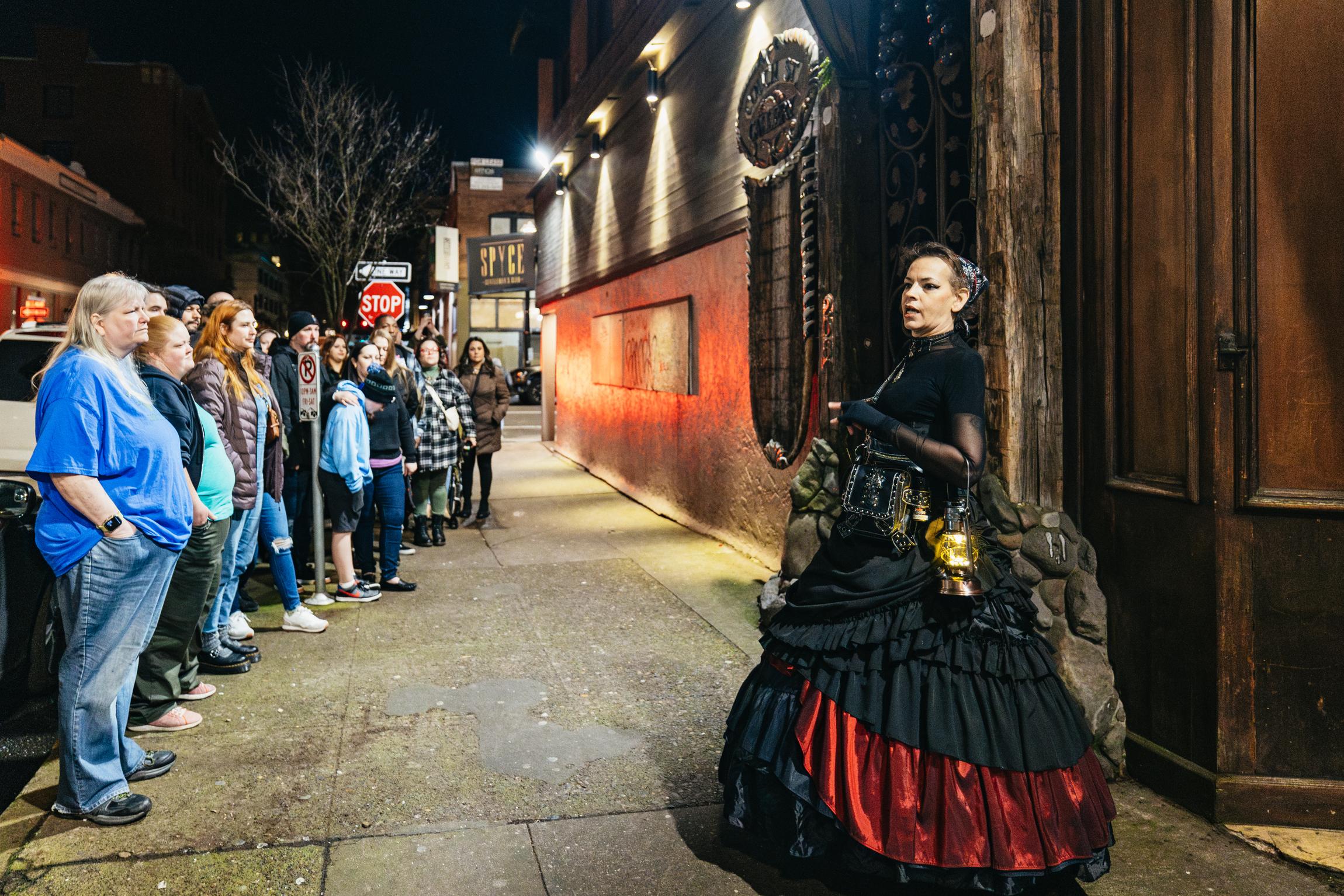
Embark on an eerie evening walking tour around Portland, visiting locations made famous by paranormal researchers, television programs, and the nationally-recognized "Top Ten Most Haunted” lists.
The Benson, on Broadway, opened in March 1913. Its ghost is Simon Benson himself, the lumber baron whose name it carries, reported on the upper floors and in the bar - where he is said to knock drinks out of guests' hands, which fits a man who was a lifelong teetotaller. It is a working hotel, so the lobby and bar are open to anyone; no tour has access to the guest floors.
Are the Portland Shanghai Tunnels real?
The basements and passages are real. The story attached to them is not. Shanghaiing did happen in Portland, but historians of Old Town have found no evidence of a tunnel network used for it, and the earliest version of the claim only appears in the 1970s - it grew alongside the tours that sell it. The Oregon Encyclopedia's account is direct about what visitors are actually shown: a basement.
What are some hidden places in Portland?
Block 14 at Lone Fir Cemetery, the southwest corner, is the one worth knowing about. More than three thousand Chinese and Chinese American people were buried at Lone Fir from the 1860s, most of them there; the county turned that corner into a maintenance yard and parking lot in the 1950s, and a 2004 survey before a planned sale found pottery, coffins and remains still in the ground. It is free and open in daylight.
Does Oregon have paranormal activity?
Oregon has what every state has - old buildings, documented deaths and stories that have grown around both. What it also has, unusually well documented, is a case study in how a ghost story gets manufactured: the Shanghai Tunnels legend can be dated to the 1970s and traced to the people who began charging admission for it. That is more interesting than a hotel corridor.
What are some haunted attractions in Portland, Oregon?
The underground tour of the so-called Shanghai Tunnels is the main paid one, and it is worth going in knowing that the historical claim behind it is unsupported. Seasonal haunted houses run in October and are a separate product entirely. If you want the real thing rather than an attraction, Lone Fir Cemetery is free, open in daylight, and carries more actual history than anything with a ticket booth.
 1 hour